The valley
Deep valleys, sun-baked cliffs and cities built from mud brick. Our Duaani sidr honey takes its name from the Duaan valley here.
01Overview
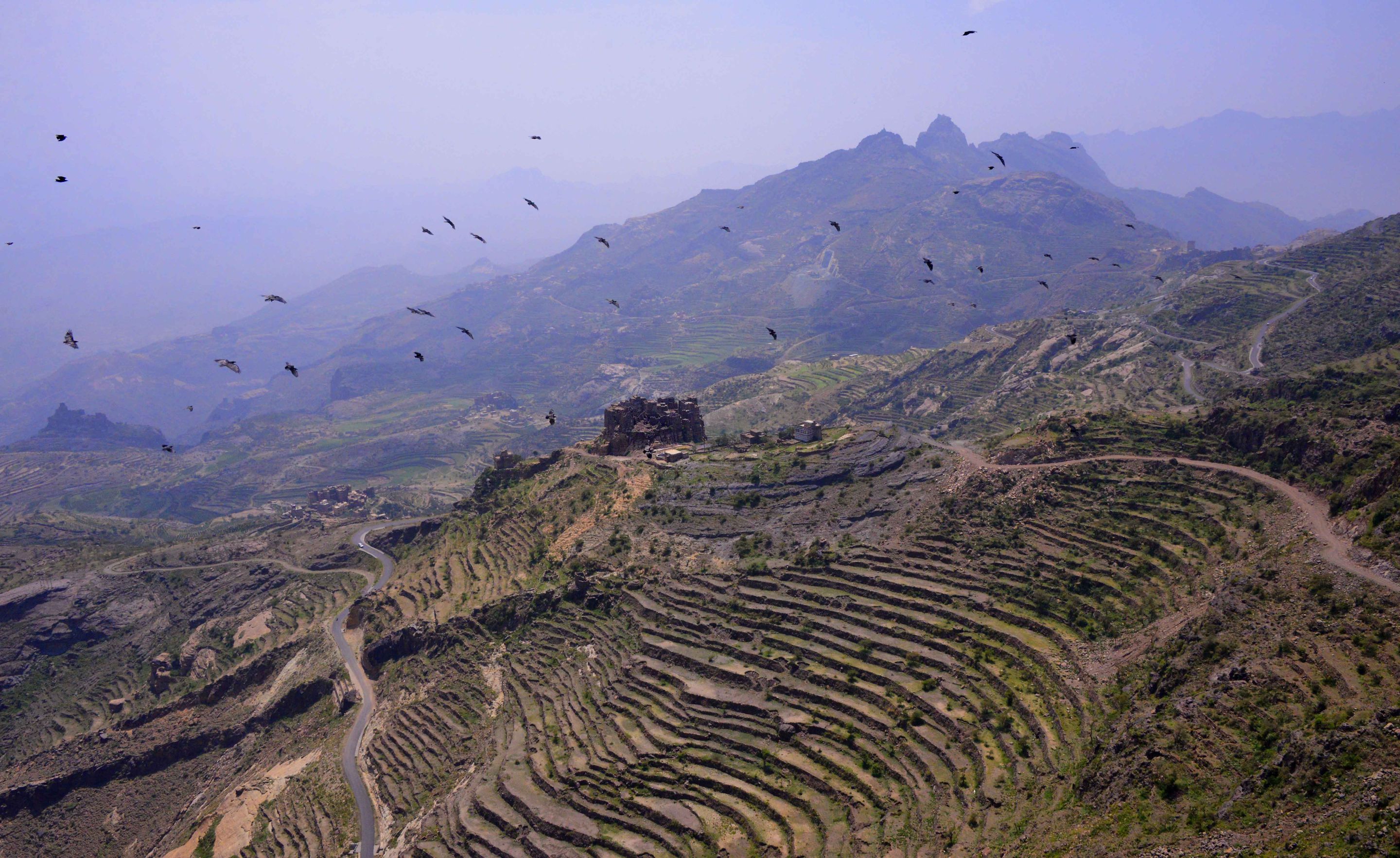
Hadramout is a historic region of south Arabia, and its core lies in eastern Yemen. A narrow coastal plain rises to a steep escarpment and then to the al-Jawl plateau. The plateau is cut by deep, sparse wadis, and its northern edge slopes toward the Empty Quarter.
02The wadi and its farms
Water is the reason people settled here. Floodwater and groundwater feed small farms along the valley floors, where settled families grow wheat and millet, some coffee, and tend date palms. On the plateau above, Bedouin families raise sheep and goats.
03Shibam, the mud-brick skyline
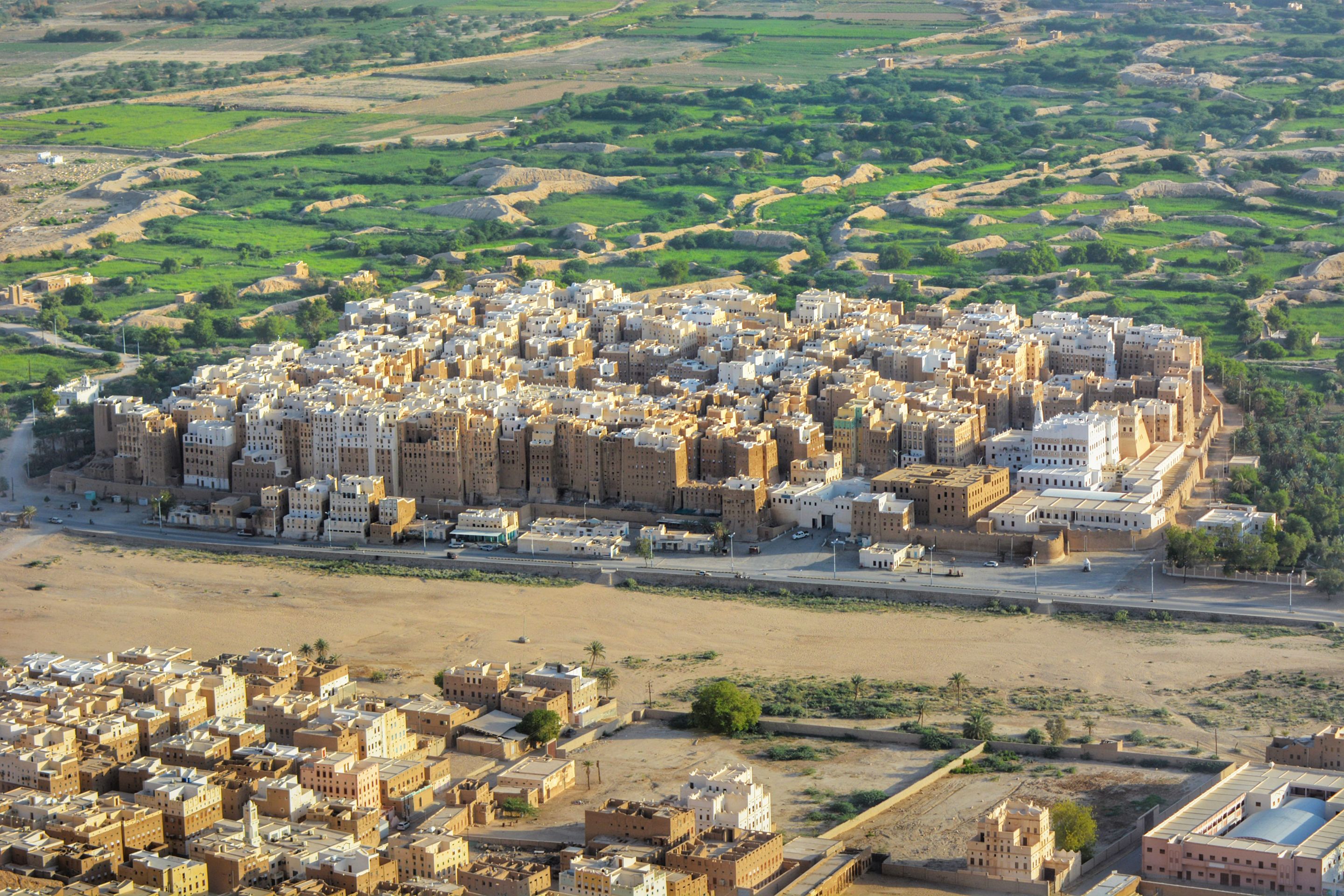
Shibam is nicknamed the "Manhattan of the Desert". Its tower houses are built entirely of mud brick, rise five to eleven storeys, and some exceed 30 metres. Most date from the 16th century, though many have been rebuilt, and the walls need regular re-plastering to resist erosion. The city has stood for an estimated 1,700 years and was listed by UNESCO in 1982. It was placed on the list of World Heritage in Danger in 2015.
04Seiyun, Tarim and Mukalla
Seiyun is home to a palace described as one of the largest mud-brick structures in the world. Tarim is an important centre of Islamic learning. Mukalla, on the coast, is the capital and largest city of Hadramout.
05Frankincense and trade
The ancient Kingdom of Hadramout had its capital at Shabwa, on the incense trade route. By the 2nd century CE the region was known for its frankincense and myrrh, and frankincense remained a major export well into the 20th century.
06The Duaan valley
Wadi Duaan (also written Daw'an or Doan) is one of the valleys of Hadramout. Our Duaani sidr honey takes its name from it, and it is the reason this page sits beside the honey.
Keep exploring
Sources: Hadhramaut (Wikipedia) · Shibam, Hadramawt (Wikipedia) · Old Walled City of Shibam (UNESCO)